

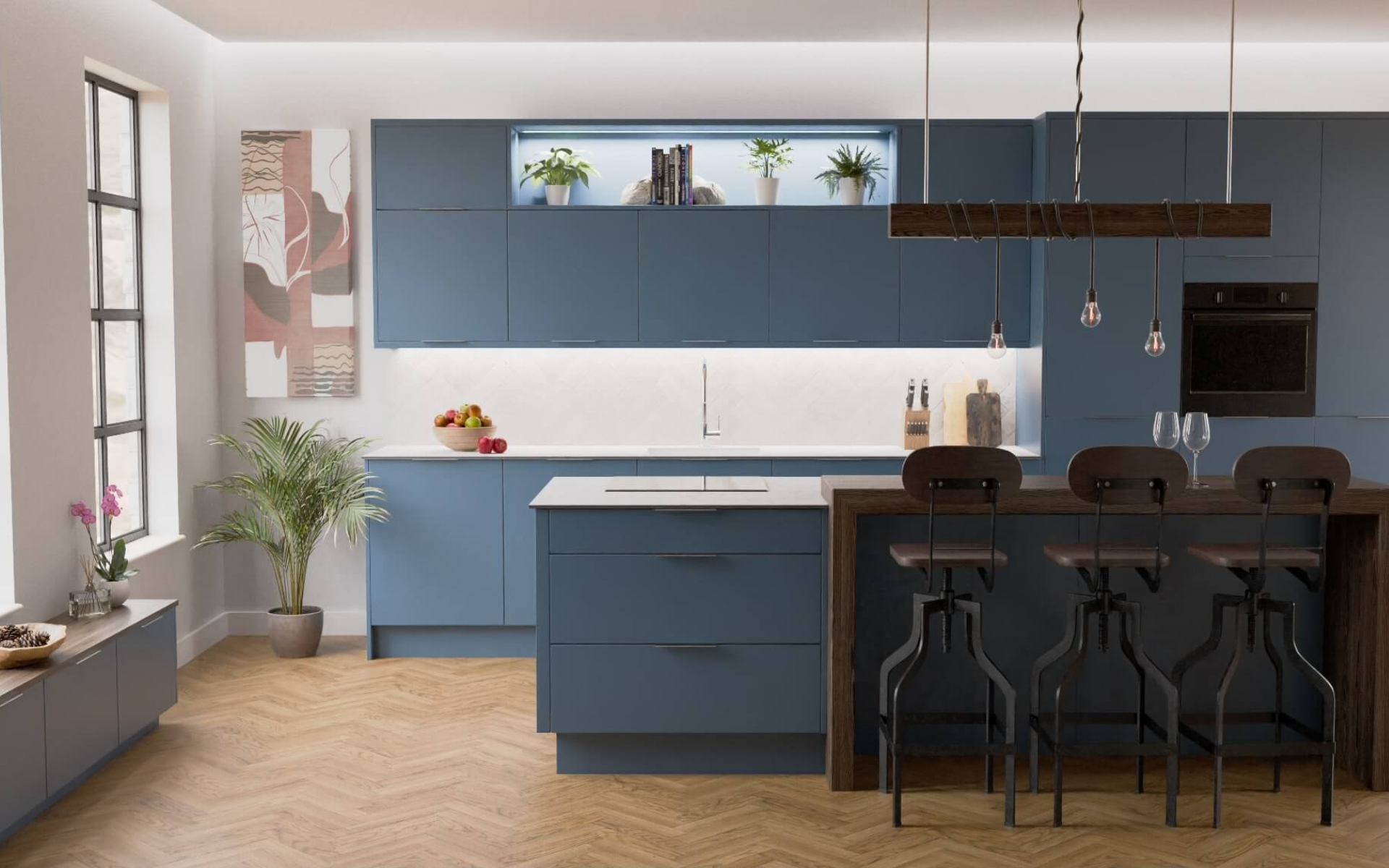
Minimalism, as a philosophical and artistic movement, emerged as a radical critique of post-war consumerism and visual clutter. It championed paring down to essence, valuing space over object, and intentionality over accumulation. Its translation into a mainstream home aesthetic in the 21st century, however, has produced a fascinating paradox: the desire to achieve “less” now drives a prolific industry selling the “right” less. Content like “Sleek & Modern Amazon Kitchen Finds for a Contemporary Home | Minimalist Aesthetic” sits at the heart of this paradox.
These articles and videos promise a path to a serene, clutter-free kitchen—a haven of calm and order—through a specific set of purchases. They position Amazon not as a source of chaotic abundance, but as a curated gallery for achieving a specific, trending look. This review critically examines this promise. We will analyze the aesthetic codes this content promotes, the types of products that fulfill them, and the underlying commercial mechanisms that convert a philosophy of reduction into a pattern of highly specific consumption. Ultimately, we explore the tension between minimalism as a lived practice of restraint and “Minimalist Aesthetic” as a consumable style sold by the unit.
2. Deconstructing the “Sleek & Modern Minimalist” Code
The article operates by promoting a highly codified visual language. This “Amazon Minimalism” is not the stark, artistic minimalism of a John Pawson home; it is a domesticated, accessible, and digitally optimized version. Its key tenets are:
-
The Monochromatic Palette: The palette is relentlessly neutral. Predominant colors are white, matte black, brushed stainless steel, soft gray, and muted wood tones (typically light oak or walnut). Color is the enemy of this aesthetic; it is seen as chaotic and childish. The promise is visual harmony and a “blank canvas” effect.
-
Geometric Simplification: Forms are reduced to essential geometries: cylinders (canisters), cubes (storage boxes), soft rectangles (cutting boards), and gentle curves (kettle spouts). Ornamentation is absent. The focus is on clean lines and silhouettes that “disappear” into the background.
-
Material Mimesis with a Conscience: The aesthetic leverages materials that signify purity and modernity.
-
Glass: Often clear or amber, suggesting transparency, hygiene, and lightness.
-
Matte Ceramic & Stoneware: Implies artisanal simplicity and quiet luxury.
-
Brushed Metal: Reads as professional, fingerprint-resistant, and cooler than shiny chrome.
-
Natural Wood Accents: Provides necessary “warmth” to prevent sterility, but only in sanctioned, lightly finished forms.
-
Silicone & Felt: Used as “soft” functional accents (lids, trivets, drawer liners) in neutral tones.
-
-
The Illusion of Invisibility: The highest compliment for a product in this genre is that it “disappears” or “fades into the background.” This applies to storage that hides clutter, appliances with integrated touch panels, and tools that hang flush against walls.
This code creates a recognizable, instantly shareable, and algorithm-friendly look. It is minimalism not as a personal journey of reduction, but as a pre-packaged visual identity.
3. The Curated Catalogue: Archetypal Products of Algorithmic Minimalism
The article functions as a style guide, recommending products that act as signifiers of this aesthetic. They are less about revolutionary function and more about perfect form within the code.
1. The Uniform Storage System: The cornerstone of the aesthetic. Chaos is not eliminated, it is containerized into visually identical units.
-
Examples: Square glass food storage containers with bamboo lids, matching ceramic canisters for dry goods, felt drawer divider bins, identical opaque white bins for pantry categories.
-
Narrative: Promises the eradication of visual “noise” from packaging and mismatched containers. The focus is on creating Instagrammable pantry and refrigerator “reveals.”
2. The “Quiet” Appliance & Tool:
-
Examples: Electric kettles and toasters in matte black or white, blenders with seamless touch interfaces, magnetic knife strips (replacing bulky blocks), induction-compatible cookware with monochrome handles.
-
Narrative: These items are chosen for their ability to look like sculptural objects when not in use. The language emphasizes “sleek lines,” “countertop art,” and “seamless integration.”
3. The Discreet Organizer & Hider:
-
Examples: Under-cabinet paper towel holders, pop-up dish drying racks that store flat, trash cans disguised as cabinets, in-drawer knife sheaths, cord-management systems for small appliances.
-
Narrative: These products address the “problem” of necessary but unsightly functional items. They celebrate concealment, promoting a kitchen where work surfaces appear perpetually clear.
4. The Minimalist “Tool-as-Sculpture”:
-
Examples: Single-piece stainless steel measuring cups, marble or teak cutting boards, handcrafted-looking ceramic bowls, walnut utensil crocks.
-
Narrative: These are the permitted “hero” objects. They are meant to be seen and appreciated for their material and form, embodying the “fewer, better things” ethos—though often at a mass-produced price point.
The cumulative message is that a minimalist kitchen is assembled, not cultivated. It is a kit of parts, all of which must conform to the same visual rules to achieve the desired effect.
4. Critical Analysis: The Paradoxes of Purchased Simplicity
Beneath the serene surface of this curated aesthetic lie significant ideological and practical contradictions.
A. The Consumption Conundrum: The most glaring paradox is the act of buying new things to achieve a lifestyle predicated on owning less. The article encourages replacing a motley collection of functional items with a visually uniform, new collection. This generates waste (the discarded “old” items) and fuels the very cycle of consumption minimalism philosophically opposes.
B. The Fast-Interior Design Model: This content promotes “minimalism” as a seasonal trend, akin to fast fashion. The aesthetic is presented as a kit to be acquired quickly from a single source (Amazon), encouraging a disposable mindset. When the trend shifts (to “cottagecore” or “maximalism”), the pressure to replace the “minimalist” kit begins anew.
C. The Sterility of Sameness: In its pursuit of visual calm, this branded minimalism often evacuates the kitchen of personality, history, and cultural specificity. The globally-sourced, algorithmically-approved items create kitchens that look identical from Seattle to Sydney, erasing individual narrative and the warm patina of lived-in spaces.
D. The Function-Form Friction: Products chosen primarily for their aesthetic compliance can be functionally inferior. A beautiful, thin-walled ceramic butter dish may chip easily. A minimalist paper towel holder may hold only half a roll. The aesthetic prioritizes the “photograph of use” over the ergonomics of daily use.
E. The Psychological Burden of Perfection: This curated minimalism creates a high-maintenance ideal. A single brightly colored cereal box or a mismatched mug can “ruin” the look, transforming the kitchen into a site of constant visual policing. The promised serenity can be replaced by anxiety about maintaining a showroom-ready state, a phenomenon critics call “Instagram anxiety.”
F. The Greenwashing of Neutral Tones: The aesthetic often co-opts the visual signifiers of sustainability (natural materials, simplicity) without the substance. A bamboo-lidded container shipped from overseas in plastic packaging is not inherently sustainable. The focus on a “clean” look can distract from a dirty supply chain.
5. Toward an Intentional Kitchen Aesthetic
If this Amazon-driven model is flawed, what is a more authentic path to a serene and personal kitchen? The answer lies in shifting from a stylistic checklist to a philosophy of curation.
-
Edit Relentlessly, Then Curate: Authentic minimalism begins with subtraction, not addition. Before buying a single “minimalist find,” conduct a rigorous audit. Donate, recycle, or discard what you do not use or love. The space you create is more valuable than any new container.
-
Prioritize Multi-Function & Quality: Seek out the minimum effective toolset. A great chef’s knife, a durable cutting board, and a versatile Dutch oven will serve you better than a drawer full of single-use, aesthetically perfect gadgets. Invest in quality that lasts, developing a patina and a story.
-
Embrace “Slow” Acquisition & Heterogeneity: Build your kitchen over time. Incorporate a beautiful hand-thrown bowl from a local potter, a well-made tool from a family-owned business, or an heirloom item. A kitchen with layers and provenance feels more human and calm than a sterile, monochrome set.
-
Design for Your Rituals, Not for the Grid: Organize based on your actual workflow. Place tools where you use them, even if it breaks a visual “rule.” A kitchen that works flawlessly for you will feel more serene than one that is perfectly arranged for a photo but frustrating to cook in.
-
Accept the Beauty of the “In-Progress”: A living kitchen is not a static photograph. It should bear evidence of life: a bowl of fruit, a drying dish, a well-used cookbook. This “positive clutter” signifies nourishment and activity, the true purpose of the space.
6. Conclusion: Beyond the Algorithmic Grid
“Sleek & Modern Amazon Kitchen Finds for a Contemporary Home | Minimalist Aesthetic” is a sophisticated commercial product. It successfully identifies a widespread cultural longing for calm, order, and beauty in the domestic sphere and offers a clear, purchasable path to achieve it. It is the IKEA-ification of minimalism: democratic, accessible, and systematized.
However, this review concludes that this path is ultimately a detour. It confuses the symptom of minimalism (a clear counter) with its substance (intentionality, freedom from consumption-driven desire, and deep appreciation for what one owns). It sells a style guide to a philosophy that is, at its core, anti-style-guide.
The most profound and personal minimalist kitchen cannot be assembled from a wish list. It is excavated. It emerges from the ongoing practices of questioning need, valuing utility, cherishing quality, and having the courage to let your space reflect your unique life—not an algorithmic ideal. In the end, the truest minimalist “find” is not a product for sale on Amazon, but the cultivated insight to know what you truly need, and the will to let go of the rest. The most contemporary home is not the one that looks like a showroom, but the one that feels like a true sanctuary for its specific inhabitants, in all their imperfect, unfiltered humanity.