

The Cathedral of Control
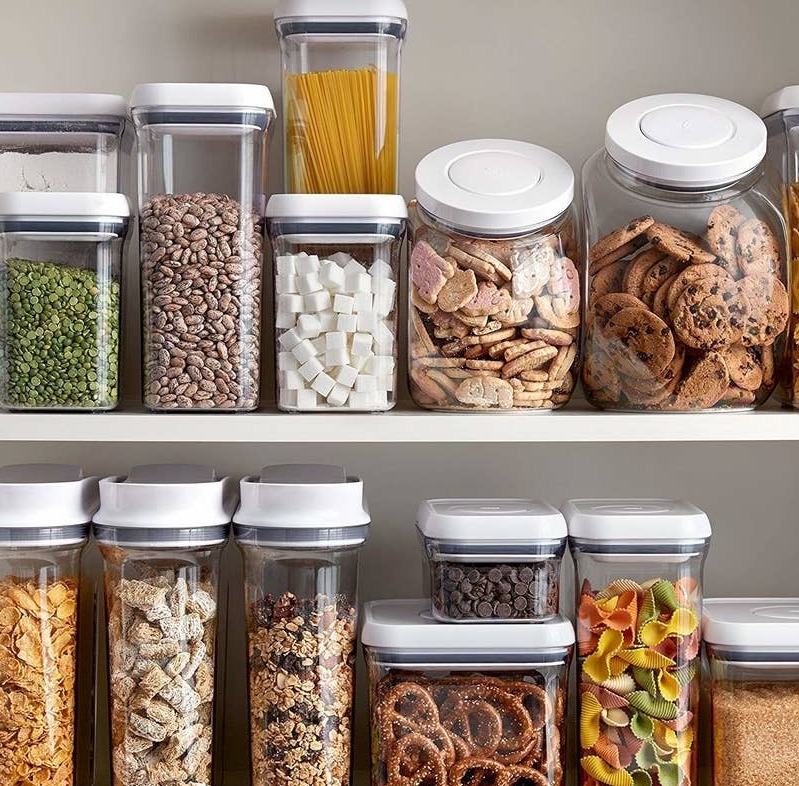
In the pantheon of domestic aspirations, the “impossibly organized kitchen” occupies a hallowed place. It is not merely a tidy workspace but a temple of order, where every tool has its designated cell, every spice its ordained position, and no crumb of chaos dares intrude upon the sanctified grid. Content titled “The Best Amazon Kitchen Accessories for an Impossibly Organized Kitchen” doesn’t just sell products; it sells access to this temple. It offers the laity the sacred vessels—the bins, dividers, and labels—with which to perform their own domestic consecration.
This genre represents the zenith of what might be termed performative domesticity. The organization it champions is not simply functional but aesthetic and moral. An “impossibly organized” kitchen is one that appears to defy the natural entropy of daily life, presenting instead a frozen tableau of efficiency. But what does “impossible” signify here? Is it a playful hyperbole, or does it reveal a deeper truth about the unattainable standards we set for our private lives? This review will dissect this pursuit of domestic impossibility. We will analyze the product ecosystem that sustains it, explore the psychological drivers that fuel it, and critically assess whether this model of organization serves the human in the kitchen or whether the human ultimately serves the system. In an age of profound instability, does this quest for perfect control offer comfort, or does it manifest as a new, particularly insidious form of anxiety?
2. Deconstructing “Impossible”: The Ideology of Flawless Order
The word “impossible” is the genre’s most revealing descriptor. It suggests an order so perfect it transcends normal human capability, achievable only through divine intervention or, in this case, the correct consumer goods. This “impossibility” is built upon several interlocking ideologies:
A. The Legacy of Domestic Science and Taylorism: The early 20th century’s domestic science movement, influenced by Frederick Taylor’s industrial efficiency principles, sought to apply scientific management to the home. The kitchen was to be a laboratory of efficiency, with “a place for everything and everything in its place.” The “impossible” kitchen is the apotheosis of this century-old project, where the home is not a haven from the factory but its mirror image.
B. The Aesthetic of Algorithmic Grids: Our digital interfaces—the clean lines of an iOS home screen, the uniform grid of an Instagram profile—have trained us to equate order with gridded, modular uniformity. The “impossible” kitchen applies this digital aesthetic to physical space. Drawers resemble CSS flexboxes; pantries look like spreadsheet tables made physical. This order is legible to the algorithm (and the camera) before it is functional for the human.
C. Organization as Moral Virtue: In a culture that often conflates busyness with worth, a perfectly organized kitchen becomes visible proof of personal discipline and competence. Clutter is framed as a moral failing—a lack of will or intelligence. The “impossible” standard thus becomes a measure of one’s character, with Amazon accessories offered as the tools for redemption.
D. The Promise of Anxiety Annihilation: At its core, the drive for impossible organization is often a response to external chaos. In a world of climate crisis, political instability, and economic precarity, the kitchen drawer becomes a manageable domain. Controlling the placement of every teaspoon offers an illusion of mastery over a fundamentally uncontrollable life. The promise is that if you can achieve perfection here, the anxiety there will diminish.
3. The Arsenal of Impossibility: Product Categories for a Parametric Kitchen
The products recommended for this quest are not ordinary organizers. They are the precision instruments of a new domestic order, each designed to eliminate a specific form of micro-chaos.
Category 1: The Hyper-Specific Niche Organizer (Eradicating Micro-Chaos)
These are organizers for organizers, solving problems most people never knew they had.
-
Examples: Plastic bag dispensers that fit inside other plastic bags, dedicated racks for pot lids within cabinets, egg carton-style holders for sauce packets, specially sized bins for aluminum foil/plastic wrap boxes.
-
Analysis & Critique: These represent infinite regression in the pursuit of order. They address symptoms (a slightly jumbled drawer of bags) by adding more objects (the dispenser), which itself must be organized. They create ultra-rigid systems: if you switch from one brand of plastic wrap to a slightly different box size, the organizer becomes obsolete. They maximize specificity at the cost of all adaptability.
Category 2: The Modular, Measured Grid System (The Containerized Utopia)
This is the full implementation of the digital-grid-in-physical-space.
-
Examples: Interlocking acrylic bin systems for pantries, adjustable drawer dividers that create perfect rectangles, modular refrigerator organizing kits with exact dimensions, labeled, uniform containers for all dry goods.
-
Analysis & Critique: These systems promise a satisfying, puzzle-like perfection. Their critical flaw is brittleness. They cannot accommodate the organic, irregular reality of household goods—the half-used bag of rice, the oddly-shaped gifted jam jar, the oversized platter for Thanksgiving. The system must either reject these items (creating new, “unsanctioned” clutter piles) or be constantly reconfigured, undermining its promise of effortless, permanent order. They also encourage over-purchasing to fill the beautiful, empty containers, mistaking visual uniformity for necessity.
Category 3: The Transparency and Surveillance Tools (The Panopticon Pantry)
These items make all contents permanently visible and accountable.
-
Examples: Clear, uniform containers for everything from flour to pasta, open shelving with perfectly aligned items, glass-front cabinets, lazy Susans that display all contents.
-
Analysis & Critique: While visibility reduces food waste, it also creates a performance space. Every purchase must be decanted to maintain aesthetic uniformity. A branded box of crackers “ruins” the look. This imposes a significant labor cost (decanting, labeling, cleaning containers) and can strip the kitchen of the cozy, collected feeling that comes from well-loved packaging and personal history. The kitchen becomes a showroom, not a archive of lived experience.
Category 4: The “Foolproof” Workflow Enforcers
These accessories attempt to hardwire efficiency into motion.
-
Examples: Pre-measured portion control containers, mise en place bowls in graded sizes, dedicated landing zones for incoming mail and keys, color-coded cutting boards for specific food types.
-
Analysis & Critique: These import professional kitchen systems into the home, ignoring a key difference: home cooking is not a high-speed, replicable production line but a variable, often improvisational, personal practice. These systems can feel rigid and joyless, turning cooking from a creative act into a compliance exercise. They optimize for a theoretical “most efficient” scenario that may rarely match the messy reality of Wednesday night dinner with tired kids.
4. The High Cost of Impossible Order
The pursuit of this aesthetic and functional ideal extracts significant tolls that the shopping lists never mention.
A. The Psychological Tax: Maintenance Anxiety
An “impossibly organized” system is, by definition, fragile. It requires constant maintenance to uphold. The moment an item is used and not immediately returned to its exact coordinate, the spell is broken. This creates a low-grade, persistent anxiety—a background hum of guilt and failure. The system, meant to reduce stress, becomes a source of it. This is the tyranny of the pristine, where the goal is not use but preservation of order.
B. The Economic Sinkhole
Achieving this look is expensive. The investment in dozens—sometimes hundreds—of matching containers, dividers, and specialty racks can easily reach into the thousands of dollars. This is a profound financial commitment to solving what is often a minor inconvenience, monetizing anxiety about clutter at a premium.
C. The Environmental Impact of Aesthetic Purism
The drive for uniform, clear, “Instagrammable” organization fuels the production of vast amounts of plastic (acrylic bins, polypropylene dividers) and drives the disposal of perfectly functional but “unaesthetic” existing containers. The lifecycle of these organizers—shipped, used until the trend changes or a component breaks, then landfilled—is ecologically devastating, all in the name of creating a temporary illusion of perfect control.
D. The Erosion of Authenticity and Joy
A kitchen organized to this extreme often feels sterile, impersonal, and unlived-in. It banishes the pleasant, human clutter of a well-used cookbook left open, a beautiful pottery bowl from a trip, or a child’s drawing on the fridge. It prioritizes a generic, algorithmic beauty over personality and warmth. In sanitizing chaos, it risks sanitizing soul.
5. Toward an Ethic of “Resilient” Organization
The alternative to “impossible” organization is not chaos, but resilient organization: systems that are flexible, forgiving, and human-centered.
-
The “Good Enough” Principle: Embrace organization that is 80% effective with 20% of the effort. A few broad categories in a drawer (utensils, tools, wraps) are more resilient and easier to maintain than a hyper-specific grid. Accept that some small amount of searching is a normal part of domestic life.
-
Zoning Over Gridding: Instead of organizing by object type, organize by activity zone. A “Coffee/Tea Station” holds the maker, mugs, and supplies together. A “Baking Zone” has flour, sugar, tools, and pans. This is intuitive, reduces cross-kitchen traffic, and is inherently flexible—you can add or remove items from a zone without breaking a whole system.
-
Prioritize “Front-Stage” and “Back-Stage” Spaces: Not every inch needs to be performance-ready. Designate “front-stage” areas (open shelves, countertops) for beautiful, frequently used items. Allow “back-stage” areas (a labeled bin in a lower cabinet, a dedicated “junk drawer”) to hold the necessary but unsightly or irregular items. This balances aesthetics with practical reality.
-
Invest in Flexible, Quality Containers: Choose a few sizes of sturdy, versatile containers (glass or stainless steel if possible) over a vast array of specialized plastic ones. Their value is in their durability and adaptability, not in their perfect fit within a momentary system.
-
Design for Failure: Build systems that anticipate and accommodate lapses. A catch-all tray for countertop clutter, a “to be sorted” bin for the pantry, a simple hook instead of a complex rack. A resilient system doesn’t collapse when life happens; it absorbs the impact and allows for easy reset.
6. Conclusion: Liberating the Kitchen from the Grid
“The Best Amazon Kitchen Accessories for an Impossibly Organized Kitchen” sells a powerful and seductive dream: that through sufficient consumption and effort, we can achieve a state of perfect, maintenance-free domestic order. It is a dream that leverages our anxiety and our aesthetic aspirations.
However, this review concludes that this dream is not just impractical; it is fundamentally dehumanizing. It asks us to contort our lived experience to fit a prefabricated system, to value uniformity over personality, and to spend our finite energy maintaining a display case rather than inhabiting a home.
The true measure of a well-organized kitchen is not whether it would impress a professional organizer or perform well on social media, but whether it reduces friction and increases joy for the specific people who use it every day. The most liberating organizational act may be to reject the “impossible” standard entirely—to embrace a little benevolent chaos, to allow our spaces to bear the gentle marks of our presence, and to find peace not in perfect control, but in the adaptable, resilient, and wonderfully imperfect practice of daily life. The kitchen is for feeding bodies and souls, not for staging an endless photo shoot of our own domestic virtue. The best organization, in the end, is the kind you barely have to think about at all.