

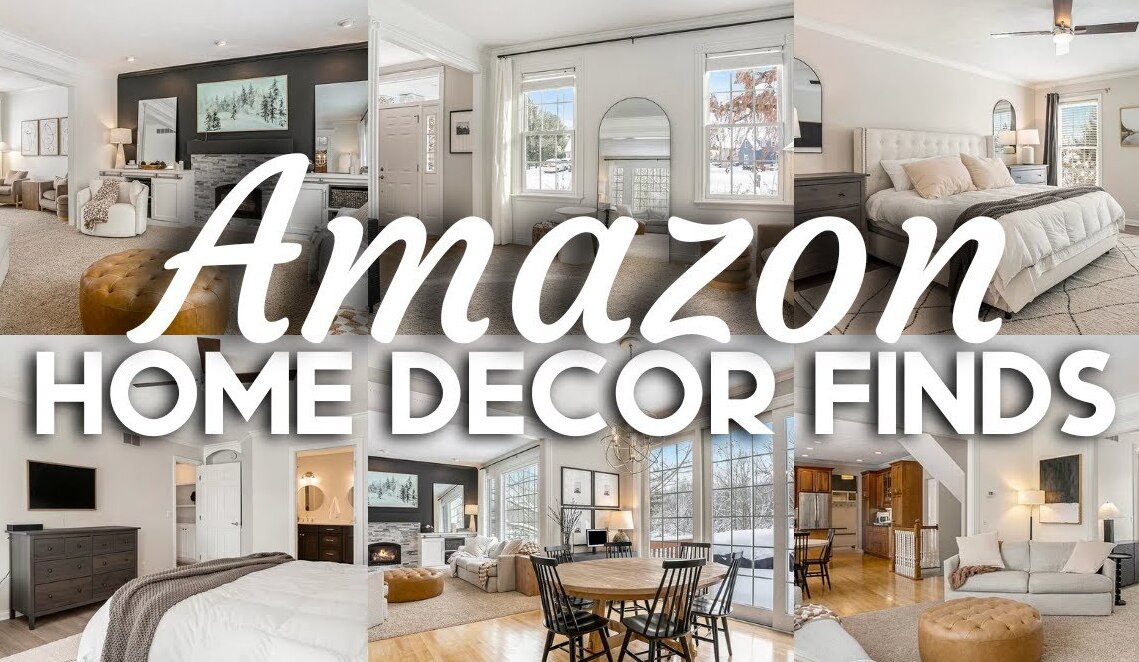
The Democratization of Desire
In the contemporary landscape of social aspiration, the desire for a beautiful, curated home is pervasive. Yet, the economic reality for many—skyrocketing costs of living, wage stagnation, the elusive dream of homeownership—renders the trappings of traditional, inherited luxury increasingly inaccessible. Into this gap steps a powerful promise: “Instantly Upgrade Any Room with These Chic Amazon Home Accessories | High-End Look for Less.” This genre does not sell mere objects; it sells social alchemy. It proposes that through savvy, algorithmically-guided consumption, one can perform a kind of aesthetic magic, transmuting the base metal of a modest budget into the visual gold of affluence.
This content operates on a potent alchemy of semiotics and scarcity. It decodes the visual language of luxury—the quiet textures, restrained palettes, and studied imperfections of high-end design—and repackages it as a purchasable formula. The “upgrade” is not structural or spatial, but purely semiotic: a change in the signs and signifiers of the room, not its substance. This review will dissect this transaction. What exactly constitutes the “high-end look” in the age of mass-produced chic? How does the promise of “instantaneity” reshape our relationship to our domestic spaces? And at what point does the pursuit of a convincing facade begin to undermine the possibility of cultivating a home with genuine character and longevity? We explore the tension between looking wealthy and building wealth, between styling a room and inhabiting a home.
2. Deconstructing the “High-End Look”: A Grammar of Affluence
The “high-end look” promoted is not a singular style but a specific, replicable grammar built on a vocabulary of materials, forms, and absences. This grammar is designed to be legible, shareable, and easily manufacturable.
A. The Monochromatic & Neutral Palette: Color, in its vibrant, personal expression, is the enemy of this universally palatable “chic.” The approved palette is relentlessly neutral: oatmeals, clays, blush taupes, matte blacks, and cool, desaturated grays. This isn’t merely a trend; it’s a strategic erasure of risk. Neutrality reads as calm, intentional, and expensive because it suggests one can afford to be quiet, to not shout for attention. It is the visual equivalent of “stealth wealth.”
B. The Cult of the “Natural” Material (or Its Simulation): Authenticity is signaled through materials that imply a connection to nature and artisanal craft, often in simulacra form.
-
Faux Organic Textures: Rattan, cane, linen, bouclé, unglazed ceramic. These materials are prized for their texture and irregularity, which signify the hand of a craftsperson. Their mass-produced versions on Amazon capture the visual texture while eliminating the cost and inconsistency of the real thing.
-
The “Quiet Metal”: Brushed nickel, matte black iron, unlacquered brass (or its resin-coated imitation). These finishes reject the showy sparkle of polished chrome in favor of something that appears weathered, understated, and “lived-in.”
-
The Weighty Illusion: A sense of heft and solidity is key. Products are described as having “substantial weight” or a “stoneware feel,” even when made of resin or MDF. The physical sensation of quality is part of the performance.
C. The Silhouette of Simplicity (Designed Absence): Ornament is banished. Forms are reduced to essential, often geometric, shapes: spheres, cylinders, soft cubes, gentle arcs. The “chic” accessory is often a singular, sculptural object—a monolithic vase, a solitary candlestick, an abstract figurine. This minimalism does the double duty of appearing sophisticated while being cheap to produce.
D. The “Curated Cluster”: While individual items are simple, the look is achieved through the careful arrangement of 3-5 of these objects: a stack of art books next to a ceramic vessel holding a single, dried pampas grass stem, atop a textured, neutral throw. This “effortless” vignette is, in fact, a highly prescribed formula for visual legitimacy.
3. The Product Pantheon: Archetypes of Aspirational Alchemy
The accessories recommended are the interchangeable parts of this aesthetic machine. They are less functional objects than stylistic placeholders.
Category 1: The Textural Layer (The “Soft” Upgrade)
These items add the sensory, lived-in quality that sterile spaces lack.
-
Examples: A chunky, neutral knit throw; linen-look curtain panels; a faux sheepskin rug; velvet pillow covers in muted tones.
-
The “Upgrade” Promise: Instant warmth and dimension. They suggest comfort and casual luxury, softening hard edges and cold lighting. The critical flaw is the material reality: synthetic “linen” that pills and stains, acrylic “wool” that melts, pile that flattens irreversibly. The texture is visual, not tactilely durable.
Category 2: The Sculptural Accent (The “Art Object” Upgrade)
A non-functional item whose sole purpose is to signify taste.
-
Examples: An abstract ceramic vase (often with a deliberately “imperfect” glaze), a set of tapered candlesticks, a concrete or resin bookend, a modernist-style figurine.
-
The “Upgrade” Promise: It injects “art” and intentionality, elevating the space from merely furnished to thoughtfully composed. These are the easiest items to produce cheaply and the most likely to reveal their provenance upon close inspection—thin walls, poorly defined seams, paint that chips.
Category 3: The Lighting Prop (The “Ambiance” Upgrade)
Lighting is reframed not for illumination, but for atmospheric staging.
-
Examples: A woven rattan basket lamp, a plug-in wall sconce with a fabric shade, a faux-marble base table lamp, Edison-style bulb string lights.
-
The “Upgrade” Promise: Light becomes decor. It creates pools of “cozy” warmth and dramatic shadow, a key tool in photographing the room. The compromise is often in light quality, electrical safety of no-name brands, and the disposability of the fixture itself.
Category 4: The Organizational Prop (The “Edited Life” Upgrade)
Storage is aestheticized, turning necessity into a display of control.
-
Examples: A set of woven seagrass bins, a lidded ceramic catch-all tray, a minimalist acrylic desk organizer, a set of matching, labeled pantry jars.
-
The “Upgrade” Promise: It visualizes a life free of clutter and chaos. The organized, beautiful container suggests the owner has their life equally in order. This confuses the container for the system, often leading to a purchase that simply holds the same clutter in a more photogenic way.
4. The Critical Paradoxes of the “Instant Upgrade”
The pursuit of this look through fast, affordable channels generates profound contradictions that destabilize its very premise.
A. The Homogenization of “Unique” Taste: The ultimate irony is that in seeking a “high-end” look through algorithmically-derived, best-selling accessories, millions of people are buying the exact same rattan lamp, ceramic vase, and knit throw. The result is not a personal, high-end sanctuary but a globally distributed set design—a “Airbnb aesthetic” that feels both familiar and profoundly anonymous. The quest for distinctive elegance ends in uniform conformity.
B. The Durability Chasm: The “for less” price point is almost always achieved through material and manufacturing compromises. A resin “marble” vase will scratch and yellow. A faux-linen curtain will fade in the sun. A thin-metal sconce will wobble. The “instant upgrade” has an instant expiration date, often within a season or two, fueling a cycle of repurchasing and waste that is the antithesis of true, sustainable luxury.
C. The Psychological Burden of the Performance: A room styled for a “high-end look” becomes a stage to be maintained. The perfectly fluffed pillows, the artfully arranged stack of books, the dust-free surfaces—this curated calm requires constant labor. The lived reality of the home (a stray shoe, a charging cable, yesterday’s mail) becomes an intrusion on the idealized image, creating a low-grade anxiety about preserving the facade.
D. The Erosion of Narrative and Authenticity: A home with a story—a hand-me-down rug, a painting by a friend, a souvenir from travel, a bookshelf filled with actually-read books—has a depth that cannot be replicated by a drop-shipped “art object.” The “instant upgrade” model encourages the erasure of these personal, idiosyncratic narratives in favor of a sleek, impersonal, and ultimately hollow aesthetic ideal.
5. Toward an Ethic of Authentic Accumulation
Building a space with lasting character and personal meaning requires a rejection of the “instant” in favor of the intentional and the incremental.
-
Practice “Slow Looking” Before Buying: Instead of seeking to instantly “upgrade,” spend time in your room. What do you actually love? What feels authentically you? What functional problem actually needs solving? Let your needs and affections, not a trend cycle, guide additions.
-
Invest in One Truly Excellent Thing: Instead of buying ten $25 “chic” accessories, save for one $250 investment in a piece of real quality—a beautifully crafted wooden bowl from a local artisan, a stunning second-hand armchair with good bones, a piece of original art from an emerging artist. This one real thing will anchor a room with more integrity than a dozen imitations.
-
Embrace the “Collected, Not Decorated” Mindset: Allow your space to tell the story of your life over time. Incorporate found objects, family pieces, travel mementos, and items made by people you know. Mix high and low, new and old. This creates a layered, authentic character that no styling formula can match.
-
Prioritize Sensory Experience Over Visual Legibility: Choose items that feel good, sound good, and smell good, not just ones that photograph well. A truly luxurious-feeling wool blanket, a speaker that fills the room with rich sound, the scent of real wood or beeswax. True ambiance is multi-sensory, not merely visual.
-
Learn Basic Principles, Not Prescriptions: Instead of copying vignettes, learn the design principles they employ: scale, balance, contrast, negative space. Understanding why an arrangement works allows you to create your own successful compositions with the objects you genuinely love, breaking free from the prefab “look.”
6. Conclusion: Beyond the Look
“Instantly Upgrade Any Room with These Chic Amazon Home Accessories | High-End Look for Less” is a compelling fantasy for a precarious economic moment. It offers a temporary sense of agency and aesthetic control in a world where lasting security feels out of reach. It provides the signifiers of a life of ease, if not the substance.
However, this review concludes that this path leads to a decorative dead end. A home assembled from transient signifiers of wealth is a home built on a foundation of sand—it may look impressive in a filtered photo, but it cannot sustain the weight of a real, messy, lived life.
The truest upgrade is not a visual one purchased from a wish list, but an experiential one cultivated over time. It is the feeling of comfort in a chair that perfectly fits your body, the pleasure of light falling across a wall in a way you love, the deep satisfaction of being surrounded by objects with stories you can tell. This cannot be instant, and it certainly cannot be generic. It requires patience, self-knowledge, and the courage to value authenticity over approval, durability over disposability, and a home that is truly yours over one that simply looks expensive. In the end, the highest-end look is the one that no one else could possibly have, because it is the unique and evolving record of your own life, lived in place.