

The Aestheticization of Asceticism
Minimalism began as radical art movement and philosophical stance—a rejection of consumer excess, an embrace of essentialism, a political statement against materialist culture. Its journey into Amazon’s “Best Sellers” in home accessories represents one of contemporary consumer culture’s most fascinating contradictions. Content promising minimalist accessories for a “calm home” sells the aesthetic of minimalism while often encouraging the practice of consumption—a fundamental disconnect that warrants critical examination.
The appeal is understandable: in an age of digital overload, environmental anxiety, and economic precarity, minimalism’s promise of clarity, control, and calm resonates deeply. Yet when this philosophy is mediated through the world’s largest marketplace of things, what emerges is often minimalism as style rather than practice—what design critics call “aesthetic austerity” divorced from ethical substance.
The Semiotics of Marketable Minimalism
Amazon-friendly minimalism operates through specific, replicable visual codes:
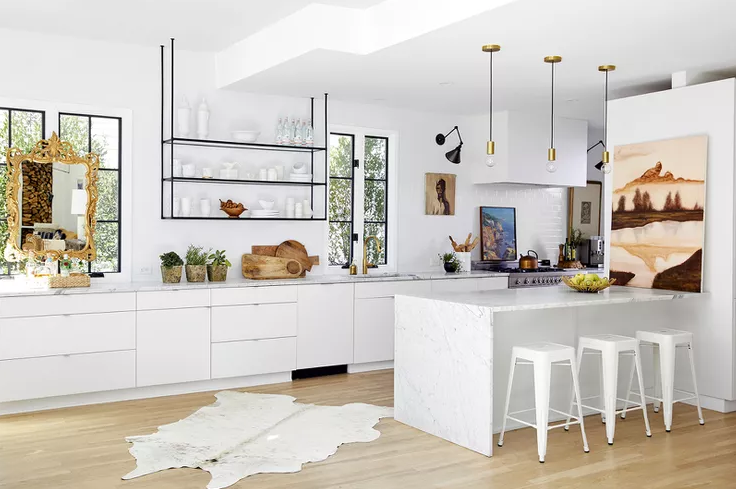
The Neutrality Mandate: Color is systematically eliminated in favor of whites, grays, blacks, and natural wood tones. This creates what color theorists describe as “non-interference palettes”—colors that don’t demand attention, creating visual rest. However, this universal prescription ignores cultural and personal relationships to color that might genuinely contribute to individual calm.
Geometric Reductionism: Forms are simplified to basic geometries—spheres, cubes, rectangles, clean lines. This references modernist design principles but often strips them of their original utopian or functional intent, leaving pure form as aesthetic object.
The “Empty” Signifier: Products are marketed for their ability to “disappear” or create “negative space.” Yet this very marketing requires the purchase of new objects to create the illusion of emptiness—a logical paradox that defines commercial minimalism.
The Minimalist-Industrial Complex
The product categories reveal much about commercialized minimalism:
The Storage-As-Aesthetic Category: Clear acrylic organizers, matching felt bins, uniform containers. These promise to hide clutter but often become clutter themselves—beautiful clutter, but clutter nonetheless. They represent what sociologist Renata Salecl calls “the tyranny of choice” applied to organization itself.
The Singular Statement Object: A single ceramic vase, one abstract sculpture, a solitary candle. These items perform minimalism through isolation, but their selection and placement require maximal consideration, creating what we might term “the anxiety of the perfectly-placed single object.”
The “Natural Material” Simulacra: Bamboo (fast-growing grass), rubberwood (byproduct wood), resin-coated composites that mimic stone or concrete. These materials reference nature and authenticity while being highly processed and standardized—the ultimate consumer-friendly “natural.”
Psychological Dimensions of Commercial Minimalism
The marketed promise of “calm” operates through specific psychological mechanisms:
The Control Fantasy: In a chaotic world, the perfectly organized minimalist space offers an illusion of complete control. Every object has its place; nothing is extraneous. This appeals to what psychologists identify as “compensatory control”—seeking order in one domain when it’s lacking in others.
The Digital Detox Proxy: Minimalist aesthetics visually reference digital detox (clean lines, absence of visual noise) while being marketed primarily through digital platforms. The aesthetic becomes a stand-in for the actual practice of disconnection.
The Moralization of Space: Commercial minimalism often carries moral undertones—clutter becomes not just unaesthetic but morally suspect, evidence of poor character or lack of discipline. This creates what cultural critics term “aesthetic morality,” where visual choices carry ethical weight.
The Sustainability Paradox
Commercial minimalism presents significant environmental contradictions:
The Acrylic Problem: Clear acrylic organizers—staple minimalist accessories—are petroleum-based plastics with poor recyclability. Their production and eventual disposal contradict the ecological values many associate with minimalism.
The Uniformity Imperative: The drive for matching sets (all white containers, identical wood tones) encourages discarding functional but non-matching items, generating waste in the name of aesthetic purity.
The Longevity Illusion: Many minimalist-marketed products follow fast-fashion production models—designed for aesthetic immediacy rather than long-term durability. Their minimalist appearance belies their disposable reality.
Case Study: The Marie Kondo Effect
The global popularity of Marie Kondo’s tidying method illustrates these tensions perfectly. While Kondo’s philosophy emphasizes gratitude for objects and keeping only what “sparks joy,” its commercial interpretation often emphasizes discarding followed by purchasing new, aesthetically-coherent storage solutions. The spiritual practice becomes consumer opportunity—a pattern repeated across minimalist movements.
Toward Authentic Minimalist Practice
If commercial minimalist accessories often undermine minimalist principles, what might authentic practice involve?
The Inventory Before Acquisition Principle: Before any purchase, conduct a rigorous inventory of existing possessions. This simple act often reveals redundant capabilities and reshapes perceived “needs.”
The Multi-Function Priority: Seek objects that serve multiple purposes well rather than single-purpose “minimalist” items. A beautiful bowl can be fruit display, salad server, and key catch-all.
The Repair and Maintenance Ethic: Invest in items worth repairing. The patina of careful maintenance often contributes more to meaningful environments than the perfection of newness.
The “Empty Space as Feature” Mindset: Literally designate and appreciate empty surfaces, walls, and corners. This requires resisting the urge to fill space simply because it exists.
The Personal Calm Audit: Identify what genuinely creates calm for you personally—which might include color, texture, or objects with personal history that commercial minimalism would exclude.
The Cultural Context of Commercial Minimalism
This phenomenon must be understood within broader cultural shifts:
The Wellness Industrial Complex: Minimalism has been absorbed into the larger wellness market, where self-improvement is mediated through consumption. Calm becomes another product attribute rather than a state of being.
Digital Life’s Physical Manifestation: Our digital interfaces are minimalist (clean apps, simple icons), and this aesthetic migrates to physical spaces as people seek coherence across environments.
Economic Anxiety Aesthetics: In precarious economic times, minimalist aesthetics can signal either prudent restraint or, paradoxically, the luxury of space and editing—a complex semiotic dance.
The Future of Minimalist Design
Emerging trends suggest potential evolutions:
The “Warm Minimalism” Movement: Incorporating texture, subtle color, and organic forms while maintaining spareness. This addresses critiques of minimalism as cold or sterile.
The Anti-Aesthetic Minimalism: Focusing purely on function and durability without concern for aesthetic coherence—a possibly more authentic minimalist approach.
The Community-Shared Minimalism: Rather than every household owning every minimalist item, communities share quality tools and objects, truly reducing collective material footprint.
Conclusion: Beyond the Serene Surface
“Curate a Calm Home: The Best Minimalist Accessories on Amazon” sells a compelling fantasy: that through careful consumption, we can purchase our way to peace. Yet this fantasy contains its own unraveling—the calmest space might be one free of the anxiety of proper curation altogether.
True minimalist living, if such a thing exists as coherent practice, likely involves less shopping, not more sophisticated shopping. It might mean developing comfort with imperfection, appreciation for the already-owned, and resistance to the constant suggestion that we need new things to achieve simplicity. The calmest home may not be the most minimally accessorized, but the one whose occupants are least preoccupied with how it looks to others, and most engaged with how it feels to inhabit.
In the end, minimalism’s deepest promise was never about creating Instagram-worthy spaces, but about creating mental space—room to breathe, think, and be. This kind of space cannot be delivered in Amazon packaging, no matter how beautifully designed the box. It must be cultivated through the difficult, un-marketable practices of letting go, saying no, and finding sufficiency in what already exists. The most serene home might be the one that stops trying to be minimalist, and simply becomes enough.