

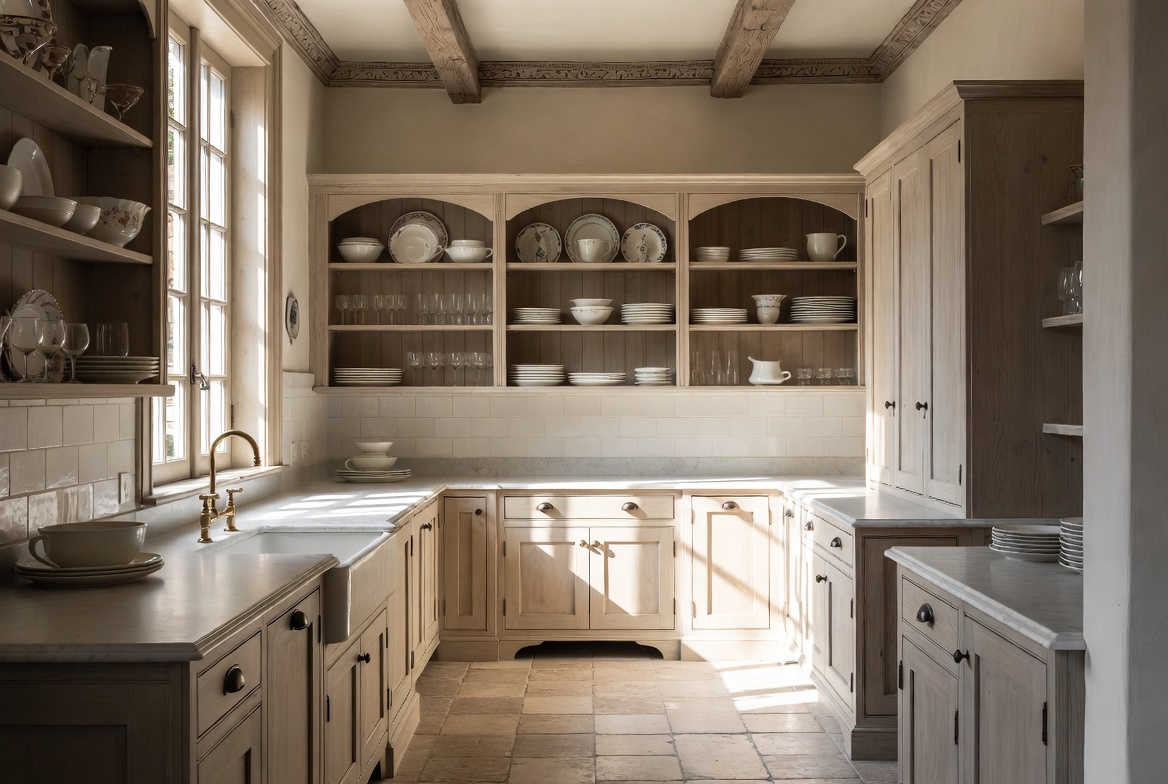
Unfitted European style kitchens embrace relaxed, furniture-like layouts that feel effortlessly elegant and collected over time. In 2026, this trend surges due to rising renovation costs, a desire for timeless charm, and inspiration from continental Europe—particularly French, Belgian, and British influences.
Instead of built-in cabinets and rigid designs, these kitchens use freestanding pieces like antique tables, hutches, baker’s racks, and mismatched cupboards, creating whimsical, adaptable spaces that transcend trends. Hashtags like #EuropeanKitchen, #UnfittedKitchen, and #KitchenDesign2026 highlight its popularity—perfect for cozy, personality-filled homes that prioritize function and character.
Unfitted kitchens offer flexibility: rearrange pieces as needs change, mix vintage with modern, and save significantly compared to full built-ins. Focus on natural materials, patina, and open flow for that signature relaxed elegance.
Freestanding Worktables & Islands: The Heart of the Layout
A large freestanding table often replaces traditional islands, serving as prep, dining, and social hub.
Antique or reclaimed wood table — A butcher block or farmhouse table with an inset sink or butcher block top becomes the centerpiece. Surround with mismatched stools or benches for casual seating.
Mix-and-match surfaces — Pair a marble-topped vintage console with a wooden dining table for varied textures—ideal for zoning prep and dining areas.
Stove cove integration — Recess the range into a nook with surrounding freestanding cabinets or open shelving—adds architectural interest and European authenticity.
These central pieces anchor the layout while keeping the space open and inviting.
Mix-and-Match Storage: Collected, Eclectic Pieces
Freestanding furniture provides storage with charm and adaptability.
Antique hutches or armoires — Use tall step-back cupboards or vintage wardrobes as pantries—glazed doors display dishes; solid ones hide appliances.
Baker’s racks & sideboards — Open metal or wood racks hold pots, pans, or ceramics; sideboards with drawers store utensils near prep zones.
Freestanding pantries — Narrow cabinets or linen presses in corners offer hidden storage—paint or distress for patina.
Hack — Source from flea markets or thrift stores; add new hardware (brass knobs) or cafe curtains inside glazed doors for softness.
This eclectic approach creates a “collected over time” feel—unique and budget-friendly.
Functional Tools & Accents: Practical European Touches
Incorporate usable elements that enhance both form and function.
Hanging pot racks — Ceiling-mounted or wall rails with S-hooks display copper pots and pans—functional decor that frees cabinets.
Open shelving & plate racks — Freestanding or wall-mounted shelves hold everyday items; add woven baskets for texture.
Cafe curtains & textiles — Breezy linen or faded floral curtains on brass rails soften windows or cabinet fronts—add nubby linens or throws for coziness.
Stove-side accents — Copper utensils, dried herbs, or small potted plants near the range bring life and scent.
These details make the kitchen feel lived-in and welcoming.
Layout Tips for Effortless Elegance
- Zoning — Define areas with furniture: prep around the worktable, storage via hutches, dining at a separate table.
- Flow — Keep pathways open—freestanding pieces allow easy movement and rearrangement.
- Balance — Mix materials (wood, metal, stone) and eras (vintage with modern appliances) for cohesion.
- Budget — Prioritize one key piece (table or hutch), then layer thrifted finds—far cheaper than custom built-ins.
- Lighting — Warm pendants over tables and under-shelf LEDs highlight textures.
These principles suit small or irregular spaces—adaptable and personal.
Conclusion
Unfitted European style kitchen layout ideas for 2026 offer relaxed elegance through freestanding, mix-and-match pieces and functional tools. This trend combines old-world charm with modern flexibility—saving money while creating a warm, timeless space that feels uniquely yours.