

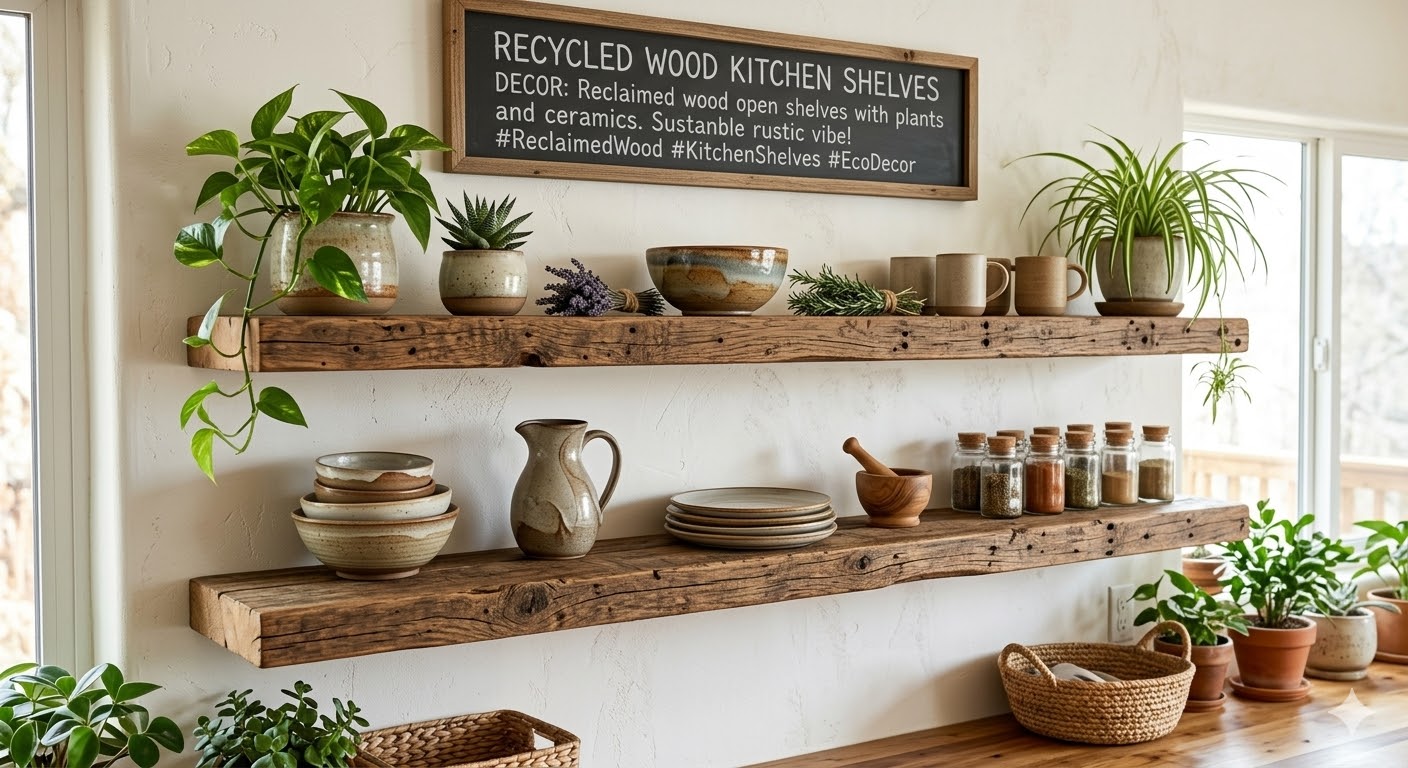
The Art of Sustainable Storage: A Guide to Recycled Wood Kitchen Shelves
In the modern home, the kitchen has evolved from a mere utility space into a sanctuary of personal expression. As we become more conscious of our environmental footprint, the shift toward sustainable interior design has moved from a trend to a lifestyle. At the intersection of eco-consciousness and high-end aesthetics lies one of the most impactful upgrades you can make: Recycled Wood Kitchen Shelves.
By opting for reclaimed timber, you aren’t just installing storage; you are bringing a piece of history into your home while practicing responsible stewardship of the planet.
Why Choose Reclaimed Wood?
Every piece of recycled wood tells a story. Whether sourced from old barns, decommissioned shipping pallets, or historic industrial buildings, this material possesses a character that new lumber simply cannot replicate.
1. Environmental Impact
Using reclaimed wood reduces the demand for virgin timber, helping to preserve our forests. Furthermore, it keeps perfectly usable material out of landfills. The “carbon cost” of recycled wood is significantly lower than new wood, as the energy required to process and transport it is a fraction of what is needed for fresh logging.
2. Durability and Strength
Ironically, older wood is often stronger than the “new” wood sold in big-box stores. Much of the reclaimed timber available today comes from old-growth trees, which grew slowly over decades, resulting in a denser grain and higher resistance to warping—a vital quality in the humid environment of a kitchen.
3. Unique Aesthetic Appeal
No two planks are identical. You’ll find natural weathering, nail holes, and saw marks that provide a rustic, lived-in feel. These imperfections are the hallmark of the “sustainable rustic vibe,” creating a focal point that feels organic and grounded.
Designing Your Open Shelving Layout
Moving from closed cabinetry to open reclaimed shelving is a bold design choice that makes a kitchen feel larger and more inviting. To master the look, consider these layout strategies:
The “Floating” Look
For a clean, minimalist approach, use hidden heavy-duty brackets. This makes the thick, textured wood appear to hover against the wall, allowing the natural grain to take center stage without visual clutter.
Industrial Brackets
If you prefer a more “modern farmhouse” or “industrial” aesthetic, pair your recycled wood with matte black iron or brass brackets. The contrast between the warm, weathered wood and the cold, sharp lines of metal creates a sophisticated balance.
The Perfect “Eco-Decor” Formula: Plants and Ceramics
The secret to making open shelves look like a professional magazine spread—rather than a cluttered pantry—is the “Organic Trio”: Wood, Greenery, and Earthware.
1. Integrating Greenery
Plants are the lungs of the kitchen. On open shelves, they provide a pop of color and soften the hard edges of the wood.
-
Trailing Vines: Pothos or Heartleaf Philodendron are excellent for higher shelves. Let the vines drape over the side of the reclaimed wood for a lush, overgrown look.
-
Culinary Herbs: Place small pots of rosemary, thyme, or mint on lower shelves for easy access while cooking.
-
Air Purifiers: Snake plants or Aloe Vera thrive in kitchen environments and help neutralize cooking odors.
2. Curating Ceramics
To maintain a sustainable vibe, skip the mass-produced plastic containers and opt for handcrafted ceramics.
-
Matte Textures: Neutral tones like oatmeal, terracotta, and charcoal gray complement the brown hues of recycled timber.
-
Functional Art: Display your most-used items—coffee mugs, cereal bowls, and spice jars—as decor. This ensures your shelves remain functional rather than just ornamental.
-
Artisanal Irregularity: Look for “perfectly imperfect” pottery. The ridges from a potter’s wheel echo the natural grain of the wood, creating a cohesive visual language.
Maintenance and Care
To ensure your recycled wood shelves last as long as the house itself, a little TLC is required.
-
Sealing: Ensure the wood is sealed with a food-safe, eco-friendly wax or oil (like beeswax or linseed oil). This protects the wood from steam and grease splatters.
-
Cleaning: Avoid harsh chemicals. A simple damp cloth followed by a dry microfiber towel is usually enough to keep the dust at bay.
-
Weight Limits: Reclaimed wood is heavy. Ensure you are drilling into studs or using high-quality toggles to support the weight of both the wood and your ceramic collection.
Conclusion: A Kitchen with Soul
Choosing recycled wood kitchen shelves is more than a design preference; it is a commitment to quality, history, and the environment. When you layer these shelves with vibrant plants and textured ceramics, you create a space that feels alive. It’s a kitchen that doesn’t just look good on social media—it feels good to live in.
By embracing the sustainable rustic vibe, you turn a functional storage solution into a daily reminder of the beauty found in renewal.