

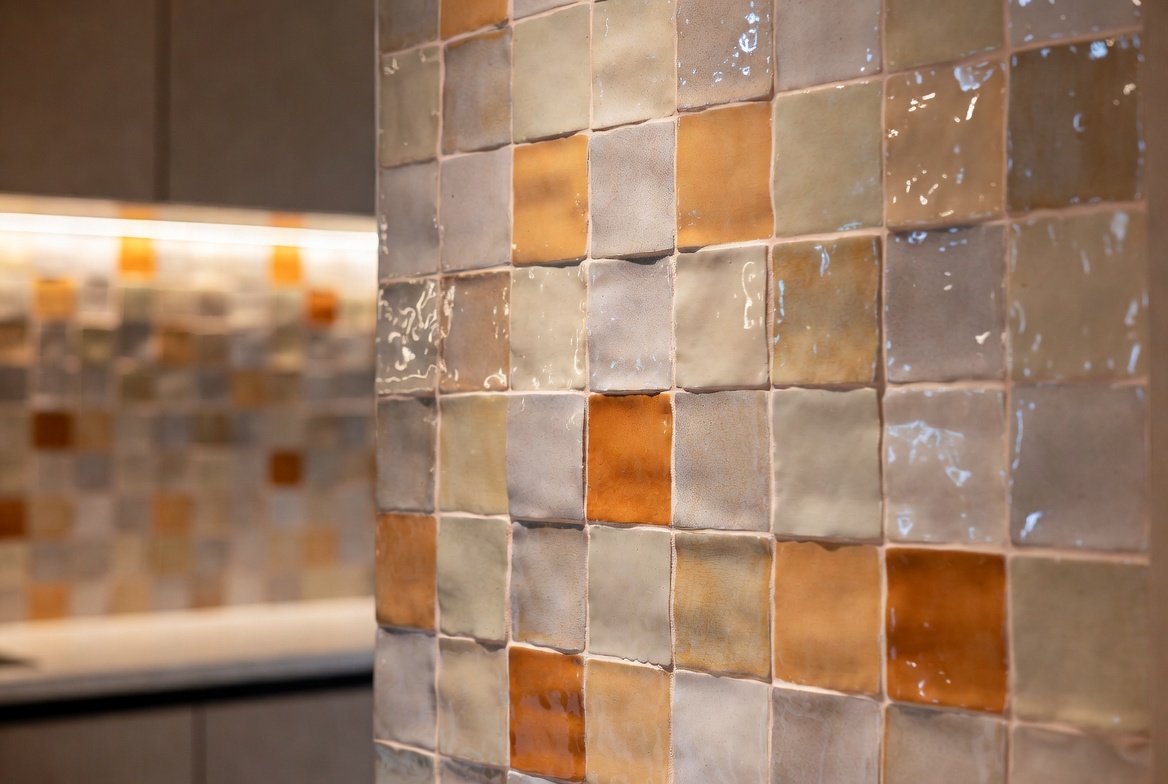
Tile texture is one of the biggest kitchen trends for 2026—moving beyond flat, smooth surfaces toward rich, tactile, dimensional tiles that add depth, warmth, and artisanal character. Zellige, handmade ceramics, and textured/relief tiles bring organic imperfection, subtle shadow play, and sensory interest that make kitchens feel more alive and human.
Designers are embracing zellige’s Moroccan heritage, hand-formed irregularities, and 3D patterns to soften modern minimalism and create cozy, storied spaces.
Texture adds visual and physical richness—light catches edges differently throughout the day, making even simple neutrals feel dynamic.
Zellige Tile Backsplashes: Handmade Moroccan Magic
Zellige—handmade Moroccan tiles with subtle variations in color, thickness, and shape—is the texture king of 2026.
Classic white or cream zellige — Matte, irregular zellige in soft whites or off-whites behind the range or sink—organic edges and slight color shifts create quiet movement and light play.
Muted earth-tone zellige — Sage, dusty rose, terracotta, or clay-toned zellige adds grounding warmth—pair with wood cabinets or brass hardware for biophilic elegance.
Full zellige wall — Extend from counter to ceiling or wrap around a pantry nook—immersive texture that feels like a handcrafted artwork.
Styling tips — Balance with smooth counters (marble/quartz) and matte black or brass accents—let the tile’s natural imperfections shine.
Zellige brings authentic, artisanal soul to any kitchen.
Handmade & Textured Ceramic Tiles: Organic Imperfection
Hand-formed tiles emphasize craftsmanship and subtle dimensionality.
Handmade subway or square tiles — Slightly wavy, uneven edges in matte sage, soft taupe, or warm beige—add gentle texture without bold pattern.
Relief & dimensional ceramics — 3D geometric patterns, subtle ridges, or embossed designs in neutral or muted earth tones—create shadow play and tactile interest.
Mixed handmade tiles — Combine sizes, shapes, and subtle glazes (matte + low-sheen) for layered depth—great for accent walls or island backsplashes.
Hack — Use handmade tiles sparingly (range wall or pantry interior) to keep costs down while maximizing impact.
Handmade tiles add warmth and character that machine-made surfaces can’t replicate.
3D & Sculptural Tile Accents: Bold Texture Statements
Sculptural and deeply textured tiles make a confident 2026 statement.
Fluted or ribbed tiles — Vertical or horizontal ridges in matte black, sage, or terracotta—add architectural drama and light-catching movement.
Hexagonal or arabesque with raised edges — Textured versions in clay or muted green—create subtle dimension and Moroccan-inspired charm.
Textured large-format panels — Oversized 3D tiles mimicking stone or concrete with raised patterns—modern yet organic.
Styling tips — Pair with smooth cabinetry and warm wood tones—balance bold texture with clean lines elsewhere.
These tiles turn walls into sculptural art.
Practical Tips for Textured Tile Success
- Placement — Focus on low-splash zones (range, sink, pantry) or accent walls—avoid heavy grease areas unless glazed.
- Grout — Match grout to tile color (or slightly darker) to emphasize texture; avoid stark white grout lines.
- Lighting — Warm LEDs (2700K–3000K) and under-cabinet strips highlight shadows and depth.
- Balance — Combine textured tile with smooth counters, matte hardware, and natural materials (wood, linen) to prevent visual overload.
- Budget — Zellige or handmade tiles vary widely—use on one wall or as inserts; porcelain mimics offer affordable texture.
Textured tiles add timeless, tactile richness that elevates kitchens.
Conclusion
Tile texture kitchen wall ideas for 2026—zellige, handmade ceramics, and dimensional tiles—bring tactile interest, warmth, and artisanal soul to modern spaces. This huge trend softens hard lines, plays with light, and creates cozy, storied kitchens.
Hashtags like #KitchenTile, #TextureDecor, and #KitchenTrends reflect the surge—perfect for backsplashes, accent walls, pantry interiors, or full feature walls.